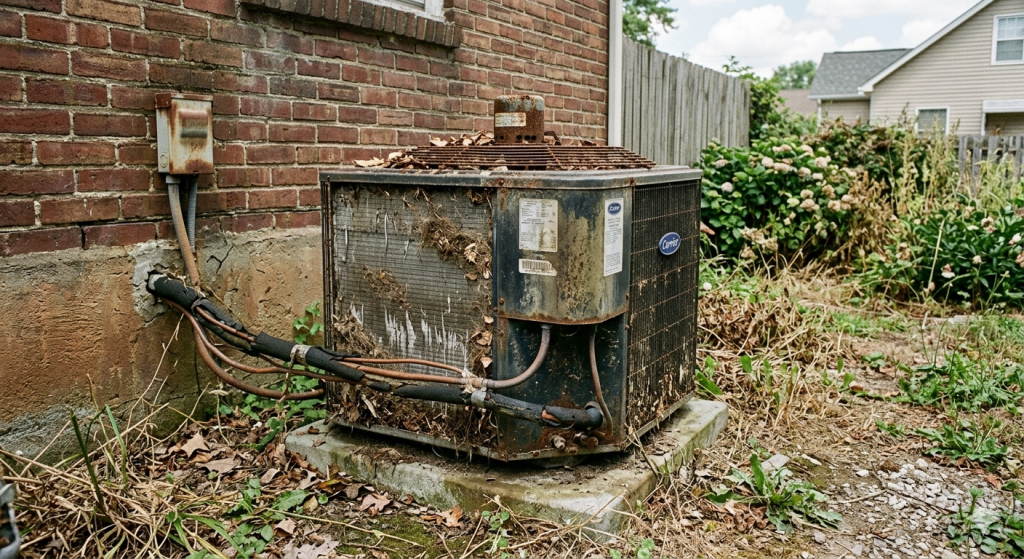
Air conditioning systems in San Diego usually last 10 to 15 years, but that alone does not help much in deciding what to do with your system.
Two systems installed in the same year can behave very differently. One may still cool the home evenly and run efficiently, while another struggles to keep up, runs longer than it should, and slowly drives up energy costs.
That is why the better question is not just how long AC systems last, but how long they continue to perform the way they are supposed to.
What “AC Lifespan” Actually Means
Most systems do not fail suddenly. They decline.
At first, the changes are subtle. Certain rooms take longer to cool. The system runs more often. Energy usage increases without improving comfort. Over time, these small shifts turn into noticeable performance problems.
By the time most homeowners start thinking about replacement, the system has often been underperforming for a while.
Average AC Lifespan in San Diego
San Diego’s climate helps systems last longer than in more extreme regions, especially near the coast. But a longer lifespan does not always mean better performance.
In most homes across San Diego County, you will typically see:
- around 10–12 years for systems with airflow or installation issues
- around 12–15 years for standard residential systems
- up to 15–18 years or more for systems that were installed and balanced properly
Even within these ranges, performance often declines before the system fully fails.
What Actually Affects How Long a System Lasts
Lifespan is not really about the equipment itself. It is about how the system operates over time.
Airflow plays a major role. When air does not move properly through the system, everything works harder than it should. Over time, that added strain shortens the equipment’s lifespan.
System sizing matters as well. A unit that is too large or too small will cycle incorrectly, which affects both comfort and durability.
Maintenance helps, but it cannot fix a system that was never designed correctly. That is why some homes end up needing air conditioning system replacement much earlier than expected, while others continue running longer with stable performance.
When Age Stops Being Useful
It is common to assume that once a system reaches a certain age, replacement is the next step. In reality, age alone does not tell you much.
A 14-year-old system can still perform well if airflow is balanced and the system was installed correctly. At the same time, a 10-year-old system can already be struggling if something is off. When it’s time to upgrade, a properly sized AC installation in San Diego – done with the right load calculation and airflow design – is what determines how long your next system lasts.
What matters is performance.
If your system still delivers stable cooling and reasonable efficiency, replacement may not be necessary. If it is struggling, age becomes less relevant. That is when it makes sense to start exploring your AC replacement options.
Signs Your AC System Is Near the End of Its Life
The shift usually shows up in patterns, not in one single issue.
Most homeowners begin to notice a combination of things like:
- rooms cooling unevenly
- longer run times during warm days
- rising energy bills without better comfort
- Repeated repairs that do not fully fix the problem
- weaker or inconsistent airflow
When several of these occur simultaneously, the system no longer operates as it should.
At that point, continuing repairs often becomes a short-term solution. A more structured look at air conditioning replacement helps clarify what actually needs to change and what can remain.
AC Repair vs AC Replacement
This is where many decisions get rushed.
If the system still performs well and the issue is minor, air conditioning repair usually makes sense. But when performance continues to decline, or problems keep coming back, repairs stop solving the real issue.
What often gets overlooked is that replacement does not always mean replacing everything.
In many San Diego homes, the better approach is more targeted. Understanding how to approach ac system replacement properly can prevent unnecessary work and lead to better overall performance.
What Drives AC Replacement Cost in San Diego
Cost varies because every system is different.
The biggest factors usually come down to:
- How much of the system actually needs to be replaced
- whether ductwork or airflow adjustments are required
- system size and configuration
- installation complexity
For example, a full system replacement will cost more than replacing only the components that are limiting performance.
That is why generic estimates provide little clarity. The most accurate way to understand your situation is to review real-world ranges and options for AC replacement cost based on your system.
Can You Extend the Life of Your AC System?
In some cases, yes. Improving airflow, addressing duct issues, and making small adjustments can help extend the system’s operational life.
But there is a limit.
If the system is already struggling to maintain comfort or running inefficiently, extending its life may not actually save money. In those situations, a properly planned air conditioning unit replacement becomes the more practical long-term decision.
A Better Way to Think About AC Replacement
Most AC systems do not suddenly fail. They gradually become less effective.
Instead of focusing on age, it is more useful to evaluate how your system performs today compared to how it used to perform.
If cooling is still consistent and efficient, you likely still have time. If performance is slipping, the system is already telling you something.
At that point, the decision is not just repair or replace. It is important to understand whether repair, partial replacement, or full air conditioning system replacement will actually improve how your home feels and operates.
Final Thoughts
AC systems in San Diego typically last between 12 and 18 years, but lifespan alone should not guide your decision.
What matters more is how your system performs, how efficiently it runs, and whether it still delivers consistent comfort across your home.
If you are starting to notice changes, the next step is to evaluate your system properly and understand what will actually improve its performance.
👉 Explore your options for air conditioning replacement and make a decision based on real system conditions, not just age.